 Midland
 Why Garage Door Springs Snap in 105°F+ West Texas Heat
A metallurgical and environmental breakdown of why Permian Basin homeowners experience spring failure in July & August, and how high-cycle oil tempering solves it.
⚡ Key Engineering Takeaway
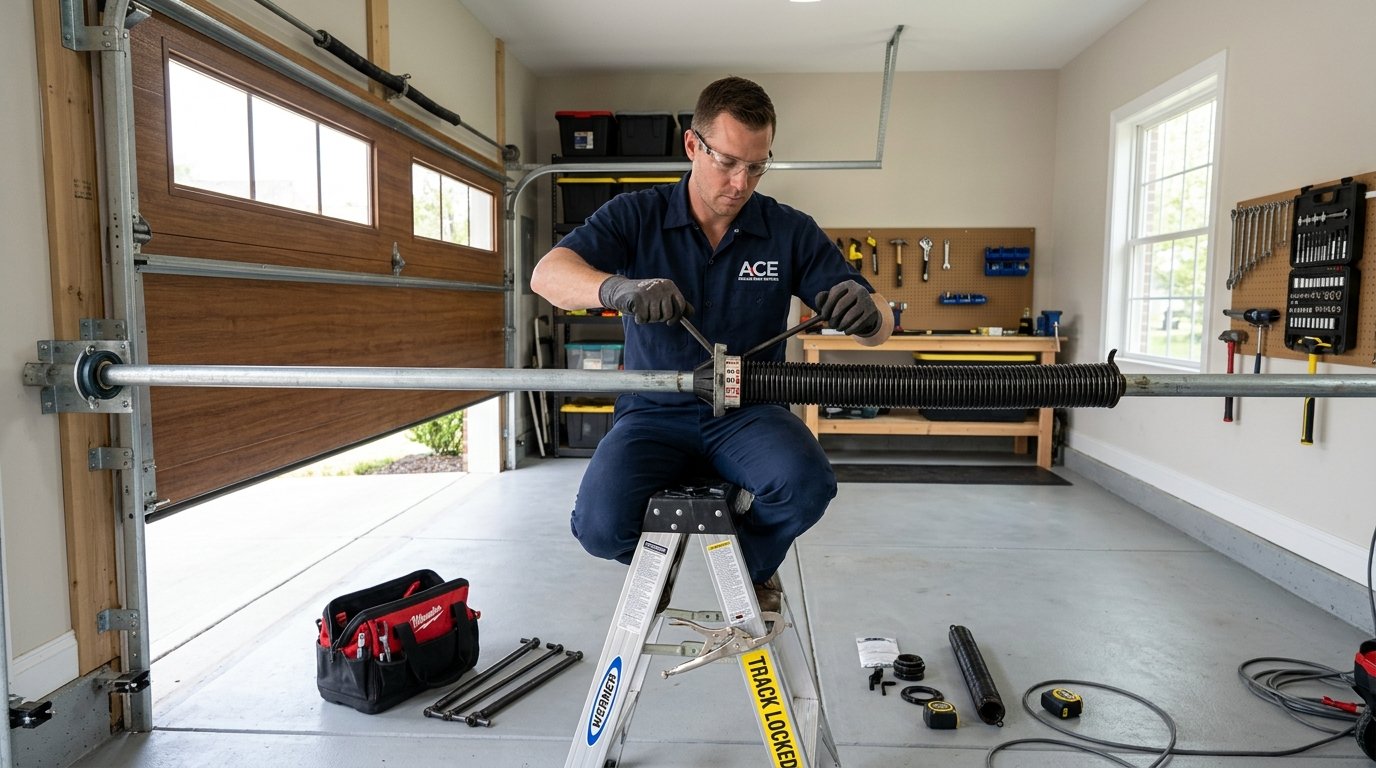
Torsion springs store extreme mechanical torque through wound helical coils. In Midland, summer roof temperatures elevate garage ceilings to 130°F–140°F. This chronic heat reduces the yield strength of standard untreated steel by up to 12%. Combined with daily 40°F thermal expansion/contraction cycles, metal micro-fractures develop, causing the spring to shear violently during normal cycling.
The 3 Environmental Factors Driving Spring Failures in Midland & Odessa
1. Extreme Attic & Ceiling Thermal Trapping
Unlike occupied living spaces, standard residential garages in West Texas lack continuous climate control. Direct radiation on asphalt shingle and metal roofs heats the uninsulated garage ceiling cavity where the torsion bar is mounted. At 135°F, standard factory petroleum-based grease breaks down and thins out, leaving bare metal coils grinding against each other with zero boundary lubrication.
2. Caliche Road Dust Abrasive Wear
The Permian Basin is known for mineral-rich, powdery caliche dust. During spring and summer windstorms, fine caliche particles settle inside the tightly coiled torsion springs. When the spring expands and winds during a door cycle, this dust acts as an abrasive grinding compound, scoring the surface of the steel wire and creating failure points.
3. Wide Day/Night Temperature Fluctuations
Midland frequently experiences diurnal temperature swings of 35°F to 45°F in a single 24-hour window (e.g. 104°F daytime high dropping to 66°F at 4 AM). Continuous thermal expansion followed by contraction creates microscopic fatigue lines in standard 10,000-cycle galvanized wire.
How to Protect Your Garage Door System
- Upgrade to High-Cycle Oil-Tempered Springs: Rated for 25,000+ cycles, oil-tempered steel retains structural elasticity across wider temperature extremes.
- Use Non-Drip High-Temperature Synthetic Lubricant: Avoid WD-40 (which is a solvent that strips grease). Apply a dedicated high-viscosity silicone or lithium spray formulated for 150°F+ heat.
- Schedule Pre-Summer Balance Testing: Disconnect the opener and lift the door to the halfway point. If it falls or feels heavy, spring tension has drifted and requires professional adjustment.
Hear a Bang in Your Garage or Experiencing a Stuck Door?
Partner technicians provide same-day broken spring replacement across Midland, Odessa, Greenwood, and Stanton.
🚨 Call (432) 319-6001 for Immediate Dispatch